

A Guide to Abrasive Types, Applications & Selection-1
Target Keywords: types of abrasives, abrasive guide, abrasive types and uses, what are abrasives, abrasive selection guide
Word Count: ~1,600 words
Internal Links: Bonded Abrasives, Coated Abrasives, Diamond Abrasives, Contact Us
CTA: Contact us for free samples and expert grinding solutions
2026-06-27 / Written by Vicky
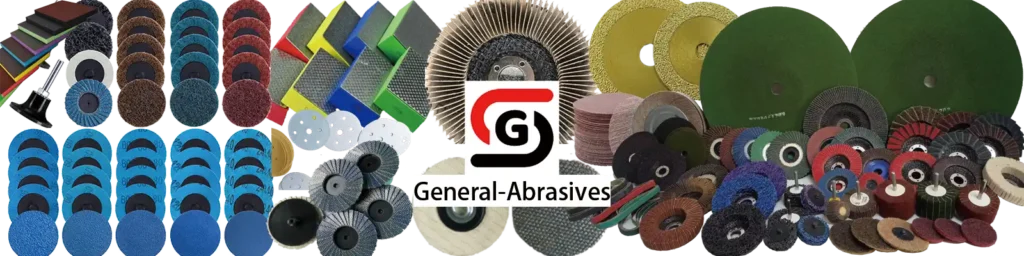
If you work in metal fabrication, construction, automotive repair, or manufacturing, abrasives are part of your daily life. But with hundreds of products on the market — grinding wheels, cutting discs, flap discs, sanding belts, diamond tools — it’s easy to feel overwhelmed.
What’s the difference between bonded and coated abrasives? When should you use a flap disc instead of a grinding wheel? And how do you choose the right grit for your job?
This guide answers all of that, step by step. Whether you’re a procurement manager sourcing from China or a workshop owner looking to improve your grinding results, you’ll walk away with a clear understanding of abrasives — and how to pick the right one every time.
1. What Are Abrasives?
At the simplest level, an abrasive is a material — usually a hard mineral — used to wear away, smooth, polish, or cut a softer material through friction.
Think of sandpaper rubbing against wood. The tiny sharp particles (abrasive grains) scratch the surface, removing a thin layer with every pass. Now scale that up to industrial grinding — the principle is the same, but the forces, temperatures, and precision requirements are far greater.
Abrasives are everywhere:
- Shaping a metal weld seam smooth
- Cutting through a steel pipe
- Polishing a stone countertop to a mirror finish
- Removing rust from a car body before painting
2. The Four Major Types of Industrial Abrasives
Industrial abrasives fall into four main categories. Understanding these will instantly narrow your choices by 80%.
2.1 Bonded Abrasives
Bonded abrasives are abrasive grains held together by a bonding agent — typically resin, vitrified (ceramic), or rubber — and pressed into a rigid solid shape.
Common products:
- Cutting discs (cut-off wheels)
- Grinding wheels
- Mounted points and grinding heads
Best for: Precision cutting, heavy stock removal, sharpening, and dimensional grinding on metals, stone, and concrete.
Key advantage: Rigid structure allows high-speed operation and precise material removal.